

Event technology
Invitations your guests
do not have to fight.
Couples build the whole wedding on their phone in four questions. Every guest gets their own link with their name already on it, and replies without creating an account, in one of eight languages. Nobody opens a laptop and nobody makes a password.
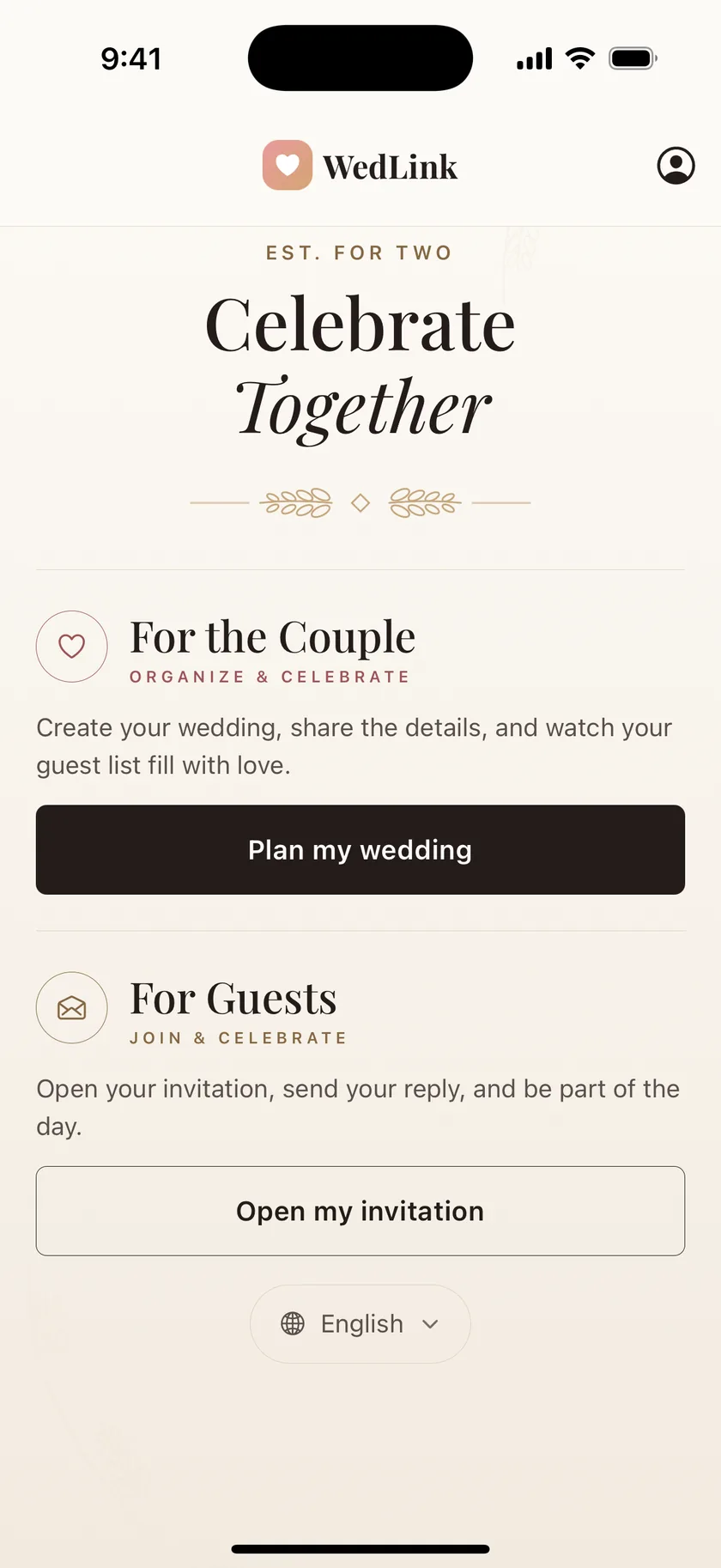
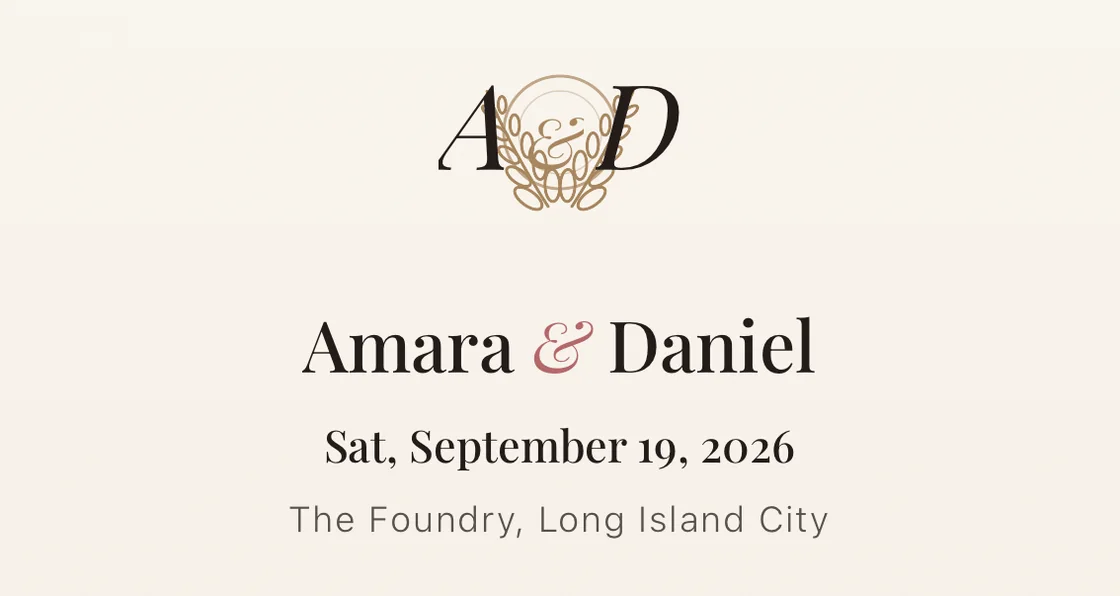
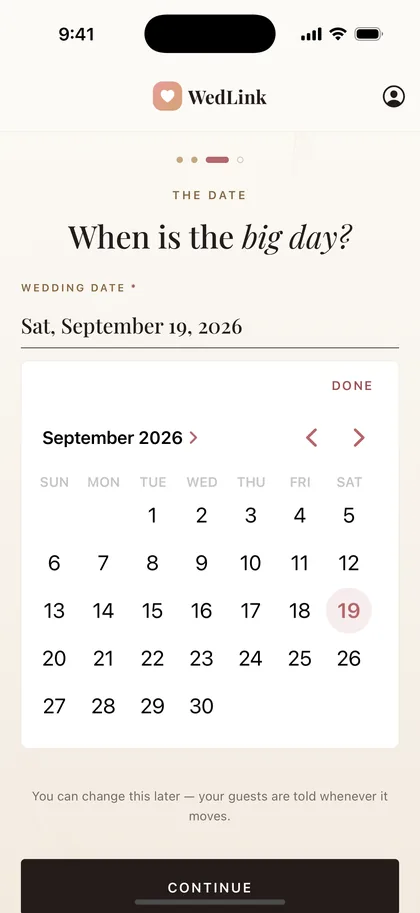
The monogram builds as you type. The invitation is visible from the first question, so the couple can see what they are making before they commit to it.
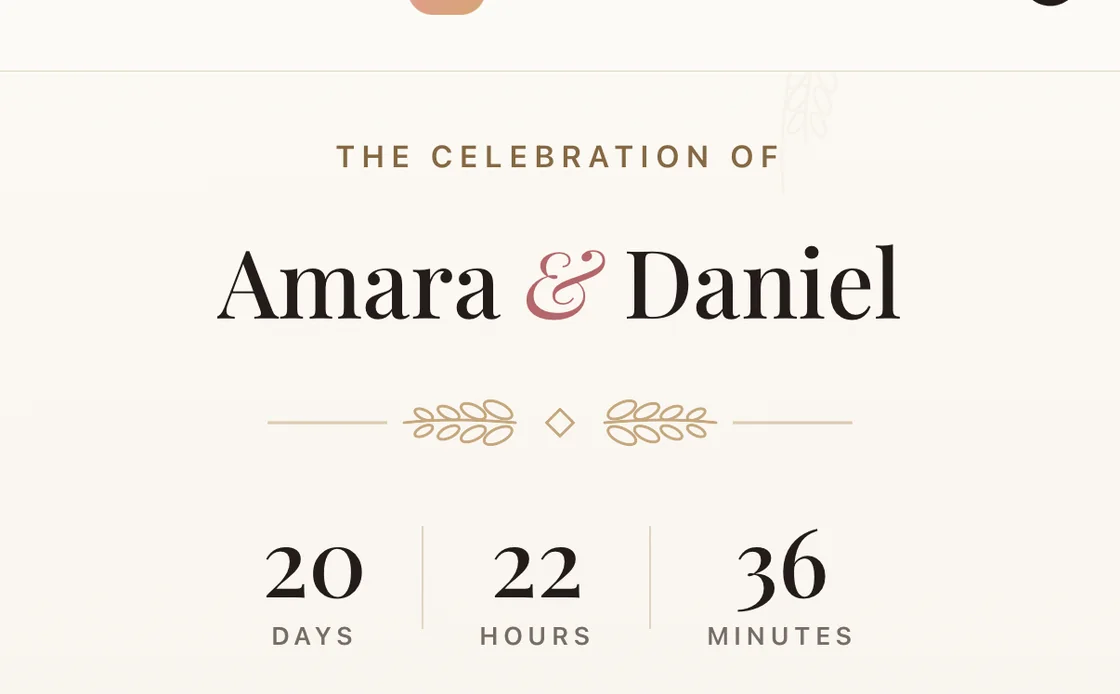
One countdown, shared by everyone. The couple and every guest are looking at the same clock.
The RSVP is where
wedding software loses people.
A guest gets a link, taps it, and is asked to create an account to say yes to a party. Aunties give up. Group chats fill with people asking the couple to just put them down. The couple ends up maintaining a spreadsheet anyway, which is exactly what the product was supposed to prevent.
Guest lists are also not monolingual. In a lot of families, half the list would rather read the invitation in a different language than the one the couple planned in.
Remove every step
that is not the reply.
Give every guest a personal link that opens their invitation with their name already on it, so there is no code to type and no account to make. Translate the entire guest path. Let the couple plan the whole thing on the phone in their hand, and sign in later, only when they want replies coming from other people's phones.
What we built
Two experiences, one event.
For the couple
Setup is four questions: who is getting married, when, where, and then the invitation exists. The monogram and the invitation preview build live while you type, so the thing you are making is visible the whole way through.
After that it becomes a dashboard: a shared countdown, headcount, attending and declined totals, guest management with private groups, and a next steps list that tells you the one thing worth doing now.
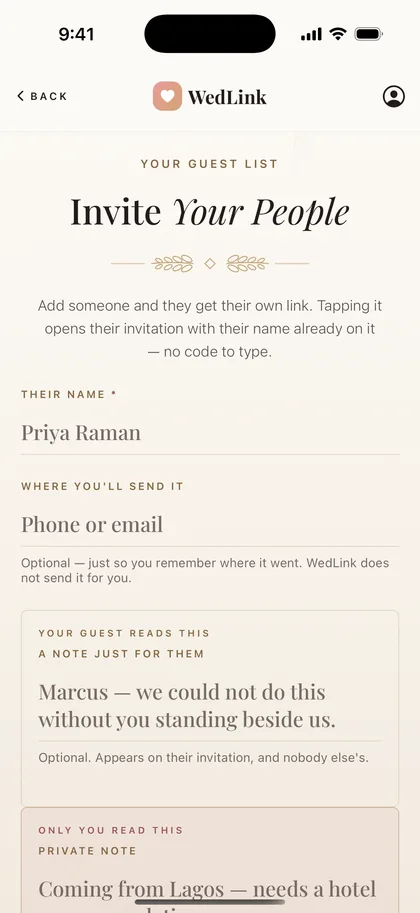
Every guest gets two notes. One they read, printed on their own invitation and nobody else's. One only the couple can see, for the things you need to remember about that person and would never write where they could read it.
Reply and get on with your day
- A personal link, no code and no account
- The invitation opens with your name on it
- Eight languages on the guest path
- Add the event to your calendar
- Plus ones handled without a second link
Know where you stand
- Live countdown and headcount
- Attending, declined and outstanding
- Private groups for sides, families and tables
- Per guest public and private notes
- A general link for the group chat
What it deliberately does not do
- Monetary gifts are disabled by design
- The app does not send messages for you
- No guest ever sees which group they are in
- Contact details are for the couple's memory only
The engineering
No account still means
proper authorisation.
The hard part of a no account guest path is that anonymous does not mean unprotected. A guest link has to authorise exactly one guest to read and edit exactly one invitation, and nothing else on the event.
Payments are switched off
Monetary gifting is disabled in the product. Handling other people's wedding money is a regulated problem, and shipping it half solved would have been worse than not shipping it at all.
Weddings happen in bad signal
Venues are basements and barns. The app caches locally and queues outbound work so a reply written on a train is not a reply lost, and the organiser view still renders when the network does not.
Eight languages where it counts
The guest path is translated eight ways because the guest list is the part of a wedding least likely to share one language. The organiser path stays in one language, which is a deliberate scope decision rather than an oversight.
The stack
What it is made of.
- React Native
- Expo
- Localisation, eight locales
- Local caching and outbox
- Supabase Postgres
- PostgREST
- Edge Functions in Deno
- Row level policies
- QR and link invitations
- Guest groups and seating
- Announcements and revisions
- Calendar integration
- Jest
- Integration suite on real Postgres
- RSVP and QR verification scripts
- Lint and format gate
YardLink Eats
Events, venues and guest experiences.
RSVP flows, event sites, guest portals and inquiry systems. We have built this before.