
AI & automation
AI systems built around
your business.
Your staff should not answer the same question forty times a day. Your inbox should not be where good leads go to cool off. We build AI systems that absorb repetitive work and stay grounded in information your business can actually stand behind.
The thing most people get wrong
Built to stay
grounded.
A general model will answer a question about your business from what it assumes, not from what you published. That is a real risk when you put one in front of the people who pay you. An apology afterwards does not undo a customer who drove across town at the wrong time.
The fix is architectural, not a wording change. We design systems that retrieve the relevant records from your verified business information first, then answer from that context. The aim is to reduce unsupported answers, and to hand over to a person when the system is not confident.
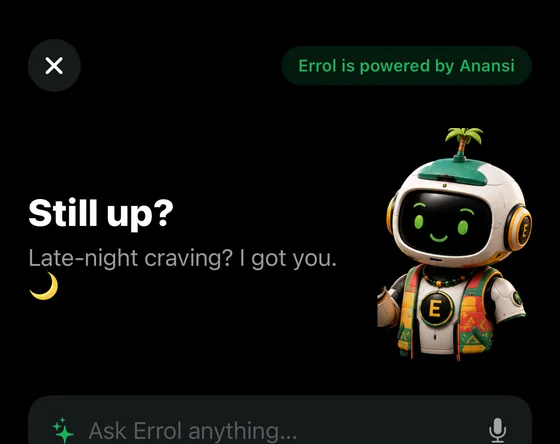
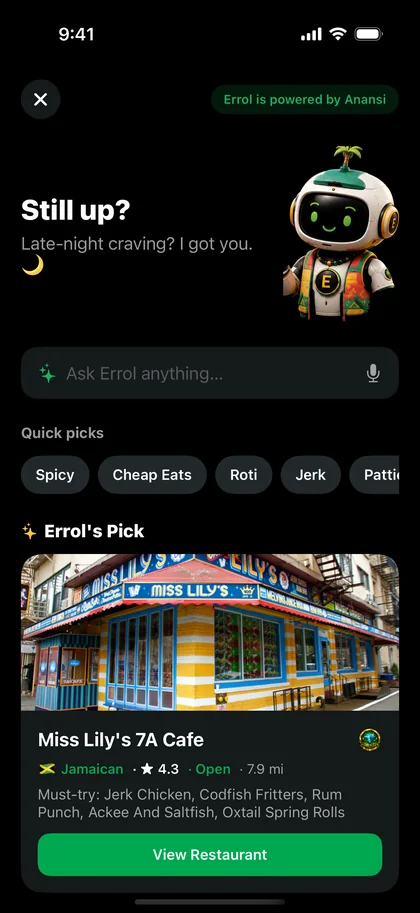
We built this for ourselves first. Errol, the food guide inside YardLink Eats, is designed around the real restaurant catalogue, with the relevant records and precomputed distances placed in context before a recommendation is generated.
What we build
Five kinds of system.
Customer assistants
An assistant that handles the questions your team answers all day, grounded in what you have actually published and approved.
Business automation
Repetitive administrative work handled before anyone sits down to it, with the output landing where your team already looks.
Lead systems
Capture the inquiry, ask the qualifying questions, collect the requirements, summarise the conversation and route it to the right person with a draft reply ready.
Knowledge systems
Most businesses already have the answers. They are spread across documents, menus, procedures and one person's head. We turn that into something searchable for staff and customers.
Voice & phone assistants
A capability we build, scoped to what your business can stand behind. Common calls answered, the rest captured properly and routed.
We run this ourselves
Winston, our own
outreach engine.
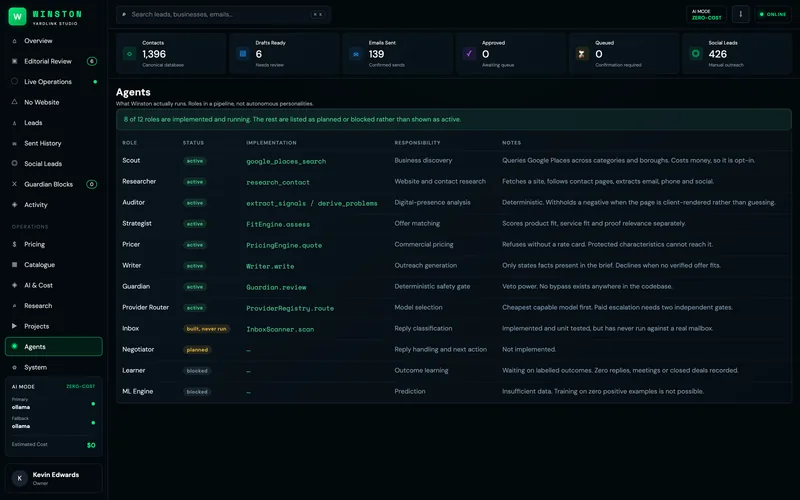
Winston discovers local business leads across New York City and Long Island, scrapes their sites for contact information and drafts personalised outreach through a provider layer that tries the zero cost path first and only spends when it has to.
The part worth copying is the safety design. There is exactly one production send path, it runs a full state machine, and it requires a separate human confirmation after approval. Costs that can be billable are labelled as billable in the interface, so nobody clicks them by accident.
When we tell you an automation should have a human in the loop, it is because we learned that on our own system.
How we approach it
Rules we work by.
Ground it in your data, not the model's memory
Systems are designed around verified business information you control, so the answers reflect what you actually published rather than what a general model assumes about businesses like yours.
Keep a human where it matters
Anything that sends, publishes, spends or commits gets a person in the loop. Automation should remove the tedious part of a decision, not the decision.
Keys stay on the server
Model credentials live in a server environment behind a proxy, never inside an app binary or a page that ships to a browser. That is how our own products are built.
Measure the work removed
The point is fewer repeated questions, fewer missed leads and fewer hours on admin. If a system cannot show that, it is a demo rather than a tool.
What is eating your week?
Tell us the question your team answers most, or the task nobody wants. That is usually where the first system should go.